5 mai 2019 May 5, 2019
wave displacement wave displacement
Étude sur l'utilisation du glitch pixel comme outil narratif. Une boucle de feedback est utilisée pour animer des images statiques de vagues.
A study on using pixel glitch as a narrative tool. A feedback loop is used to animate static wave images.
Exploration du glitch pixel comme outil d’animation dans TouchDesigner. Le point de départ : des images statiques de vagues, issues de banques d’images libres.
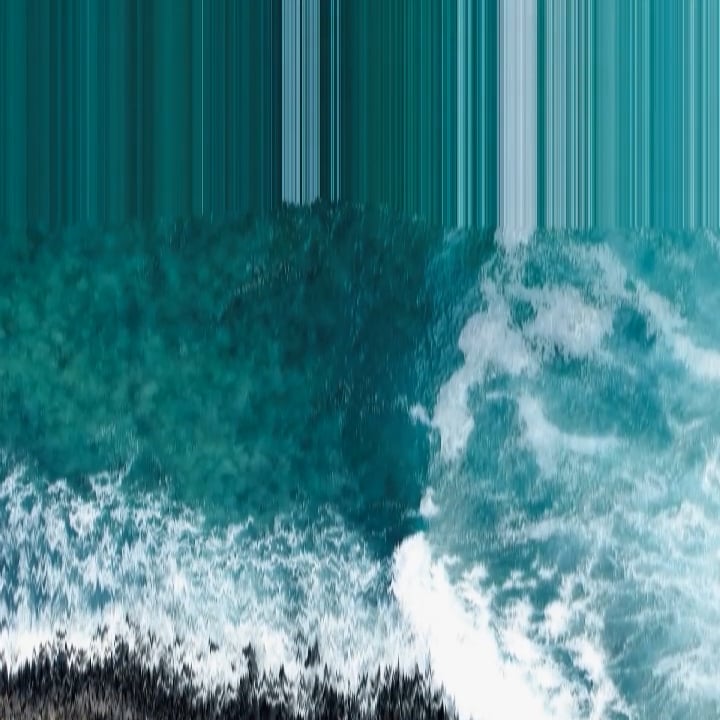
Une boucle de feedback est appliquée sur ces images pour générer un glitch vertical. Le résultat : un déferlement pixel qui descend sur l’écran et mime le mouvement de la vague dans l’image. Le glitch ne perturbe pas le sujet — il le prolonge. La matière numérique agit comme la matière photographiée.
L’intérêt de l’exercice est de trouver une cohérence entre la nature du bug et le contenu de l’image. Le glitch vertical n’est pas appliqué au hasard : c’est précisément parce qu’une vague déferle de haut en bas qu’il fonctionne ici comme animation narrative.
Exploring pixel glitch as an animation tool in TouchDesigner. The starting point: static wave images from free image banks.
A feedback loop is applied to these images to generate a vertical glitch. The result: a pixel cascade descending across the screen, mimicking the movement of the wave in the image. The glitch does not disturb the subject — it extends it. The digital material acts like the photographed material.
The interest of the exercise is finding coherence between the nature of the bug and the content of the image. The vertical glitch is not applied at random: it is precisely because a wave breaks from top to bottom that it works here as narrative animation.